


Tooth loss is a common issue that affects not only oral health but also a person’s confidence, speech, and ability to chew. Fortunately, thanks to advancements in modern dentistry, there is a permanent and natural-looking solution: dental implants.
In this comprehensive guide, you’ll find answers to all your questions about dental implants — including what they are, who they’re suitable for, how the procedure is done, recovery timelines, costs, and frequently asked questions.
What Are Dental Implants?
A dental implant is an artificial tooth root placed into the jawbone to replace missing teeth. Made typically from titanium, a biocompatible material, the implant fuses with the bone over time through a process called osseointegration. Once the implant is securely integrated, a crown (artificial tooth) is attached, resulting in a natural-looking and functional replacement.
Implants can be used to replace a single missing tooth, multiple teeth, or even a full set of teeth.
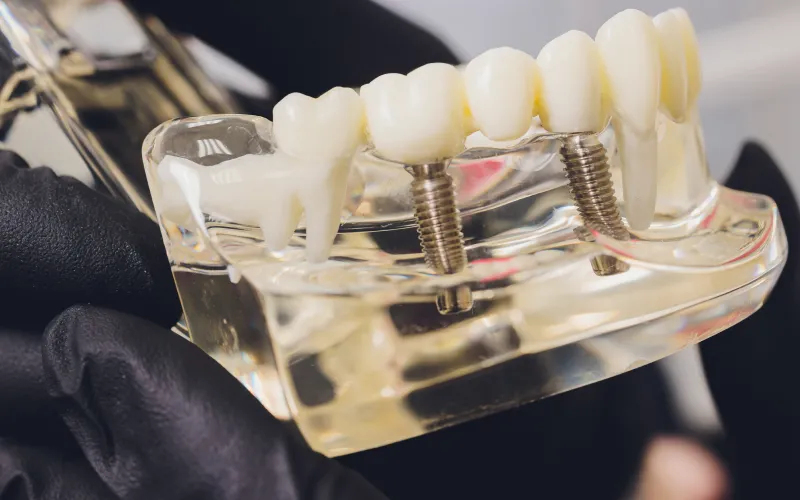
When Are Dental Implants Recommended?
Dental implants are ideal in the following cases:
- Single tooth loss
- Multiple missing teeth
- Full mouth reconstruction
- As a permanent alternative to removable dentures
- For those seeking a natural-looking and functional solution
However, having a sufficient amount of healthy jawbone is essential. In cases of low bone density, bone grafting may be necessary.
Stages of Dental Implant Treatment
1. Examination and Planning
The first step involves a thorough oral examination, including X-rays or 3D scans to assess the jawbone and plan the implant procedure accordingly.
2. Implant Placement
Under local anesthesia, the implant is placed into the jawbone through a minor surgical procedure. The process usually takes 20–30 minutes per implant.
3. Healing Period (Osseointegration)
It takes 2 to 4 months for the implant to fuse with the bone. During this time, no load is applied to the implant.
4. Abutment and Crown Placement
Once healing is complete, an abutment is attached to the implant, and impressions are taken to create the final crown. The crown is then securely placed.
Advantages of Dental Implants
- Natural look and feel: Closely mimics natural teeth in both appearance and function
- Permanent and reliable: With proper care, they can last a lifetime
- Enhanced chewing comfort: Enables efficient biting and chewing, even with hard foods
- Improved speech: Eliminates speech problems caused by missing teeth
- No damage to surrounding teeth: Unlike bridges, implants don’t require filing down adjacent teeth
- Prevents bone loss: Helps maintain the jawbone and facial structure
Types of Dental Implants
1. Single Tooth Implant
Used to replace one missing tooth. Only the gap is treated, without affecting surrounding teeth.
2. Multiple Tooth Implants
For several missing teeth, individual implants or implant-supported bridges are used.
3. Full Arch (All-on-4 / All-on-6)
In cases of complete tooth loss, 4 or 6 implants are placed in each jaw to support a full set of fixed prosthetic teeth.
Who Should Avoid Dental Implants?
Implant treatment may not be suitable in certain cases:
- Insufficient bone volume (unless bone grafting is performed)
- Uncontrolled diabetes
- Poor oral hygiene
- Patients undergoing chemotherapy or radiotherapy
- Individuals under 18 (due to incomplete jaw development)
Frequently Asked Questions About Dental Implants
1. Is dental implant surgery painful?
No. The procedure is done under local anesthesia, so you won’t feel pain. Mild discomfort may occur afterward, which can be managed with painkillers.
2. How long does healing take?
The implant typically takes 2–4 months to fully integrate with the bone. In some cases (e.g., All-on-4), a temporary prosthesis may be placed the same day.
3. Are dental implants permanent?
Yes. With proper oral hygiene and regular check-ups, implants can last a lifetime.
4. Can implants fail?
Failure is rare, but if the implant doesn’t integrate with the bone, it may need to be removed and replaced. Success rates are over 95%.
5. Can implants cause allergies?
Titanium is biocompatible and rarely causes allergic reactions.
Dental Implant Costs in 2025
The cost of dental implants depends on factors such as:
- Number of implants required
- Implant brand and material used
- Experience of the dentist
- Location and reputation of the clinic
As of 2025, the average cost of a single dental implant in Turkey ranges between $250 to $700 USD, while All-on-4 full arch systems may cost between $2,500 and $5,000 USD.
A personalized treatment plan and cost estimate will be provided after your clinical consultation.
Post-Treatment Care for Dental Implants
- Avoid alcohol and smoking for at least 24 hours
- Maintain excellent oral hygiene
- Avoid hard, spicy, and very hot foods
- Take all prescribed medications and antibiotics
- Attend all follow-up appointments
Dental Implants vs. Bridges vs. Dentures
| Feature | Dental Implants | Dental Bridges | Removable Dentures |
| Durability | Very High | Moderate | Low |
| Aesthetics | Natural-looking | Moderate | Low |
| Impact on Adjacent Teeth | None | Requires filing down teeth | None |
| Comfort | High | Moderate | Low |
| Cost | Higher | Moderate | Lower |
A Natural and Permanent Solution to Missing Teeth
Dental implants are a modern, long-lasting, and effective solution for replacing missing teeth. When performed by a qualified dentist using quality materials, implants can restore your smile, chewing ability, and self-confidence for a lifetime.
If you are struggling with missing teeth, book a consultation with a dental professional to explore whether dental implants are the right solution for you.