

Hair loss is a common aesthetic concern that affects the quality of life for both men and women. Thanks to advancements in modern technology, FUE hair transplant (Follicular Unit Extraction) offers a permanent and natural-looking solution to this issue.
FUE is a minimally invasive hair restoration technique that leaves no visible scars and ensures faster recovery with natural results. In this comprehensive guide, you’ll find everything you need to know about FUE hair transplants — from who is a good candidate to how the procedure works, recovery timeline, advantages, and frequently asked questions.
What is FUE Hair Transplant?
FUE, short for Follicular Unit Extraction, is a hair transplant technique in which individual hair follicles (grafts) are extracted one by one from a donor area (usually the back of the head) and transplanted into thinning or bald areas.
Unlike the traditional FUT (Follicular Unit Transplantation) method, FUE does not involve removing a strip of scalp tissue, meaning no linear scar is left behind. The FUE method offers a more comfortable experience with a quicker recovery and more natural-looking results.
Who is a Good Candidate for FUE Hair Transplant?
FUE hair transplant is suitable for individuals who:
- Experience genetic hair loss (male or female pattern baldness)
- Have thinning hair or bald patches
- Suffer from hair loss due to scars, burns, or trauma
- Want to enhance density in the beard, eyebrows, or mustache
- Are looking for a permanent and natural solution to hair loss
A proper medical consultation is essential before the procedure to evaluate your scalp, hair loss pattern, and donor area density to determine suitability.
How is FUE Hair Transplant Performed? Step-by-Step Procedure
The FUE procedure is typically performed under local anesthesia and takes about 6 to 8 hours, depending on the number of grafts.
1. Consultation and Planning
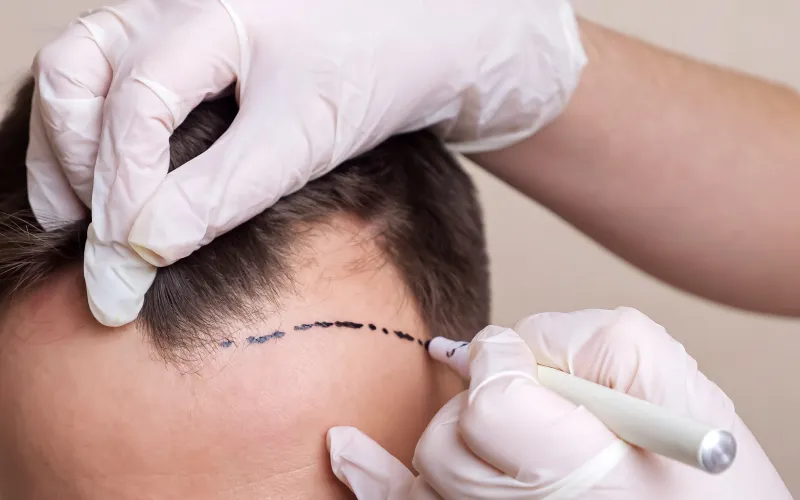
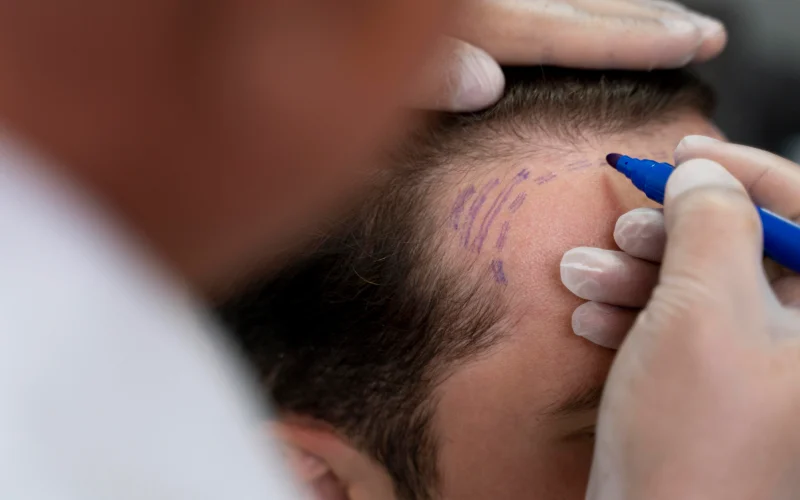
A thorough evaluation is done by the specialist to assess the degree of hair loss and determine the required number of grafts. A natural hairline is designed based on the patient’s facial structure.
2. Preparing the Donor Area
The hair in the donor area (usually the back of the scalp) is trimmed, and local anesthesia is administered.
3. Extraction of Grafts
Using a micro motor or manual punch tool, the surgeon extracts individual hair follicles carefully, avoiding damage to the grafts.
4. Graft Sorting and Preservation
Extracted grafts are kept in a special solution and sorted into single, double, or multiple hair groupings.
5. Channel Opening (in Classic FUE)
Tiny incisions are made in the recipient area to implant the grafts. The angle, depth, and direction of these channels are critical for a natural look.
6. Implantation
The prepared grafts are meticulously placed into the channels. In the DHI method, the grafts are implanted directly using a special implanter pen without pre-opening channels.
Recovery Timeline After FUE Hair Transplant
First 3 Days
- Mild redness and scabbing occur.
- Avoid contact with water and direct sunlight.
- Sleep with your head slightly elevated.
First Week
- Scabs begin to fall off.
- Gentle washing is done using the doctor’s recommended shampoo and lotion.
Weeks 2–4
- The shock loss phase begins; transplanted hairs shed temporarily.
- Hair follicles remain under the skin and are not lost.
Months 3–6
- New hair starts to grow.
- Initially thin, the hair thickens over time.
Months 6–12
- 70%–90% of the transplanted hairs are visible.
- Final results typically appear within a year.
Benefits of FUE Hair Transplant
- Scar-free technique: No stitches or linear scarring
- Natural results: Proper angle and direction of hair ensure a realistic look
- Fast healing: Minimal downtime and discomfort
- Versatility: Can be applied to beard, eyebrows, and mustache as well
- Minimally invasive: Performed under local anesthesia with low surgical risk
FUE vs. FUT: Key Differences
| Feature | FUE Method | FUT Method |
| Graft Collection | One by one | Strip of scalp |
| Scarring | No linear scar | Visible scar |
| Healing Time | Faster | Slower |
| Discomfort | Minimal | Moderate |
| Application Areas | Hair, beard, eyebrows | Mostly scalp only |
FUE Hair Transplant Cost in 2025
FUE hair transplant costs can vary based on several factors:
- Number of grafts required
- Technique used (FUE, micro FUE, sapphire FUE, DHI)
- Clinic location and reputation
- Doctor’s expertise
As of 2025, the average cost for an FUE hair transplant in Turkey ranges from $1,000 to $3,000 USD, depending on the scope of the procedure. Major cities like Istanbul, Izmir, and Ankara offer a wide range of high-quality clinics at competitive prices.
Pre- and Post-Procedure Instructions
Before the Procedure:
- Avoid alcohol, aspirin, and blood thinners
- Stop using hair styling products
- Refrain from smoking (or reduce it)
- Wear comfortable, button-down clothing
After the Procedure:
- Protect your head from impacts or rubbing
- Avoid strenuous activities for 10–14 days
- Stay out of direct sunlight
- Use only the doctor-recommended shampoo and care products
Frequently Asked Questions (FAQs)
1. Is FUE hair transplant painful?
No. The procedure is done under local anesthesia. Only the initial injections might cause mild discomfort.
2. Are the results permanent?
Yes. The transplanted hair follicles are resistant to hair loss and provide lifelong results.
3. When can I return to work or daily activities?
Most patients can resume daily activities within 2–3 days, but avoid heavy physical exercise for at least 10 days.
4. How long does the procedure take?
Depending on the number of grafts, the session usually lasts between 4–8 hours.
5. Can anyone get a FUE hair transplant?
As long as you have a healthy donor area and no major health conditions, you’re likely a good candidate.
A Natural and Lasting Solution to Hair Loss
The FUE hair transplant technique is a safe, modern, and highly effective solution for those suffering from hair loss. When performed by an experienced team in a quality clinic, the results are both natural-looking and permanent.
If you’re considering hair restoration, start by booking a free consultation with a reputable clinic to evaluate your options and begin your journey to a fuller head of hair.